Aug 23, 2026 | Teaching Series
In this third installment of the series “Big Faith for Little Hearts,” Pastor Greg explores what it means to have a faith that endures to the end. Drawing from the parable of the sower, the life of Joshua, and the story of Daniel, the sermon examines why so many believers start strong in their faith but eventually fade away. The central argument is that lasting faith is not built on religious rule-keeping or ritual, but on a genuine, deeply rooted love relationship with God. Just as Joshua lingered in God’s presence and Daniel refused to defile himself even at personal cost, believers today are called to prioritize intimacy with God above the comforts and distractions of the world. The sermon concludes with the assurance from Romans 8 that nothing can separate us from the love of God, and that it is this love — both God’s love for us and our love for him — that gives believers the strength to stand firm through tribulation, temptation, and the slow fade of worldly distraction.
Aug 16, 2026 | Teaching Series
Pastor Steve calls the church to recognize that every person is being discipled by something or someone, and that the critical question is who or what is doing the discipling. Drawing from Deuteronomy 6 and the broader witness of Scripture, he establishes that truth is not subjective or self-created but is objective, rooted in the unchanging character of God, and ultimately embodied in the person of Jesus Christ. The sermon challenges both parents and the broader congregation to take seriously their responsibility to pass a gospel-centered legacy to the next generation by knowing, living, and speaking God’s word in every dimension of daily life. Pastor Steve emphasizes that the Word of God teaches, reproves, corrects, and trains in righteousness, and that genuine discipleship flows not from mastering a creed but from surrendering to Christ, who is the way, the truth, and the life.
Aug 9, 2026 | Teaching Series
Pastor Aaron opens a new series called “Big Faith for Little Hearts,” challenging the entire congregation, not just parents, to take seriously their responsibility to pass a genuine, living faith to the next generation. Drawing from Psalm 78, Deuteronomy 6, Luke 24, and Matthew 28, he warns against the danger of children carrying a “borrowed faith” that is not truly their own. He emphasizes that discipling the next generation begins with adults who model an authentic, daily faith centered on the gospel of Jesus Christ. The sermon calls every believer, regardless of age or family status, to invest intentionally in younger generations by telling them what God has done, keeping Jesus at the center of all teaching, and obeying the Great Commission with confidence in Christ’s promised presence.
Aug 8, 2026 | Teaching Series
Big Faith for Little Hearts explores God’s call to faithfully pass the Gospel from one generation to the next. Centered on Jesus Christ, each message reveals how the Bible’s one story of redemption shapes everyday discipleship and equips every believer to help the next generation know Him, follow Him, and make Him known.

Jul 26, 2026 | Teaching Series
In the concluding message of the summer series “Truth in a Confused World,” Pastor Steve calls believers to stand firm in their faith through the strength of Christ rather than their own ability. Drawing primarily from Ephesians 6, the sermon emphasizes that the Christian life is a spiritual battle requiring the full armor of God. The message traces a progression from identity in Christ to active, obedient discipleship, urging believers to run their race with endurance, fix their eyes on Jesus, finish faithfully, and live with eternity in view. The sermon culminates in the hope of Revelation 21, where God promises to make all things new and dwell with his people forever.
Jul 19, 2026 | Teaching Series
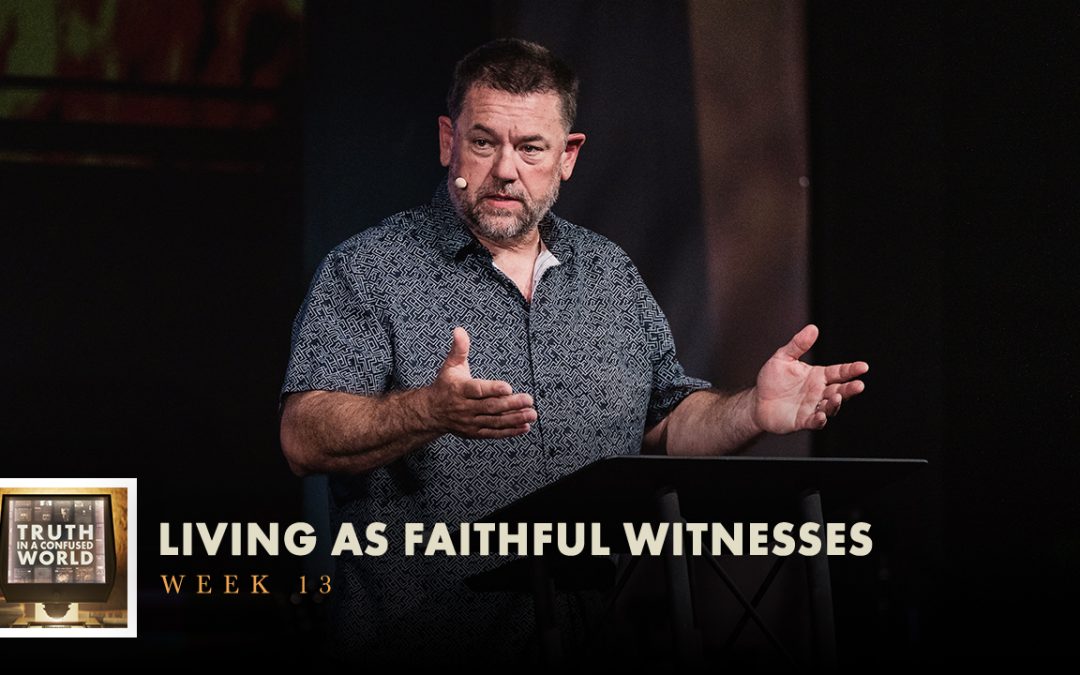
This powerful message challenges us to move beyond merely acting like Christians to actually being the salt and light Jesus calls us to be. Drawing from Matthew 5:13-16, we’re reminded that we ARE the salt of the earth and the light of the world – not that we should try to become these things. Salt preserves, enhances flavor, and creates thirst. Similarly, our lives should preserve truth, enhance the world around us, and make others thirsty for Jesus. Light exposes darkness and helps people see clearly. The transformative insight here is that we need to stop trying so hard and start abiding in Christ. When we spend time with Jesus, we naturally become like Him. The message addresses a sobering reality: many believers cannot clearly explain why they believe what they believe or effectively share their faith. We’re called to be ambassadors for Christ, carrying the ministry of reconciliation, always ready to give a defense for the hope within us. But this isn’t about memorizing scripts or putting on a performance – it’s about genuine transformation. The key to living this authentic Christian life isn’t found in our own strength but in surrendering to the Holy Spirit’s power. Acts 1:8 promises that we will receive power when the Holy Spirit comes upon us, enabling us to be witnesses. The challenge is letting go of our old lives, stepping away from the fence we’ve been straddling, and fully embracing the abundant life God has waiting for us on the other side.
Jul 12, 2026 | Teaching Series
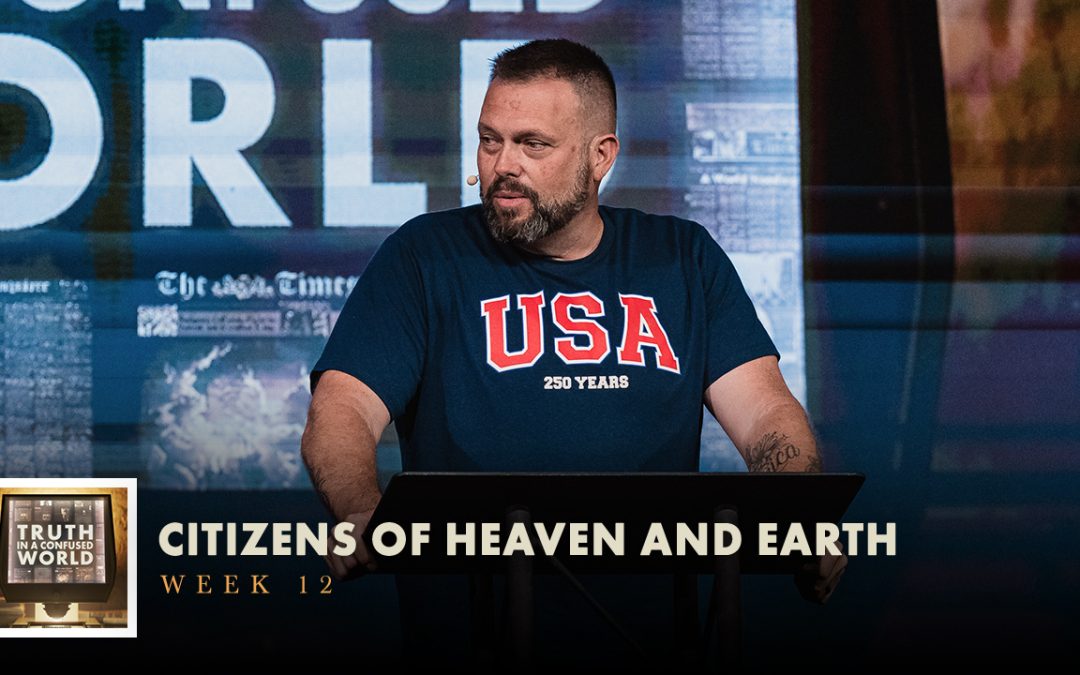
This powerful message challenges us to examine where our true citizenship lies and how we live out our faith in the world around us. Drawing from Philippians 3 and the story of Zacchaeus, we’re reminded that our primary identity is as citizens of heaven, yet we’re called to be exemplary citizens wherever God has placed us. The teaching explores a beautiful tension: while we belong to Christ’s eternal kingdom, we have real responsibilities to steward the earthly nation and community we find ourselves in. We’re encouraged to consider whether we’re willing to look foolish for Jesus, just as Zacchaeus climbed that sycamore tree without concern for others’ opinions. The message addresses a modern struggle many believers face—the false notion that loving our country somehow conflicts with our faith. Instead, we discover that biblical principles actually call us to honor governing authorities, pray for our leaders, and work for the welfare of our communities. The reminder that we live better than 99% of humans who have ever existed should move us from entitlement to gratitude. Most importantly, we’re challenged to ask ourselves: Who is our king? Are we representing Christ well in our culture? And who needs to hear the good news this week? Our freedom and blessings aren’t just for our comfort—they’re tools for advancing God’s kingdom and demonstrating His love to a watching world.
Jun 28, 2026 | Teaching Series
This powerful message challenges us to examine where our treasure truly lies and what it means to be faithful stewards of everything God has entrusted to us. Drawing from Matthew 6 and the parable of the talents in Matthew 25, we’re confronted with a profound truth: wherever our treasure is, there our heart will be also. The sermon explores how our spiritual vision depends entirely on the alignment of our hearts with God’s kingdom. When our treasure is in the right place, our whole body is full of light, we can see clearly, and anxiety loses its grip on us. But when our hearts chase after earthly treasures, we stumble in darkness even when we think we’re walking in light. The parable of the talents reveals something stunning about God’s justice: faithfulness matters more than results. The servant who turned five bags of gold into ten and the servant who turned two into four received the exact same commendation. This means that whether God has called us to fill stadiums or faithfully serve in quiet obscurity, our reward depends on our obedience to what He’s specifically called us to do. The sobering warning to the unfaithful servant reminds us that stewardship isn’t optional for those who claim to follow Christ. We must actively invest what God has given us for His kingdom, or risk hearing words we never want to hear.
Jun 21, 2026 | Teaching Series
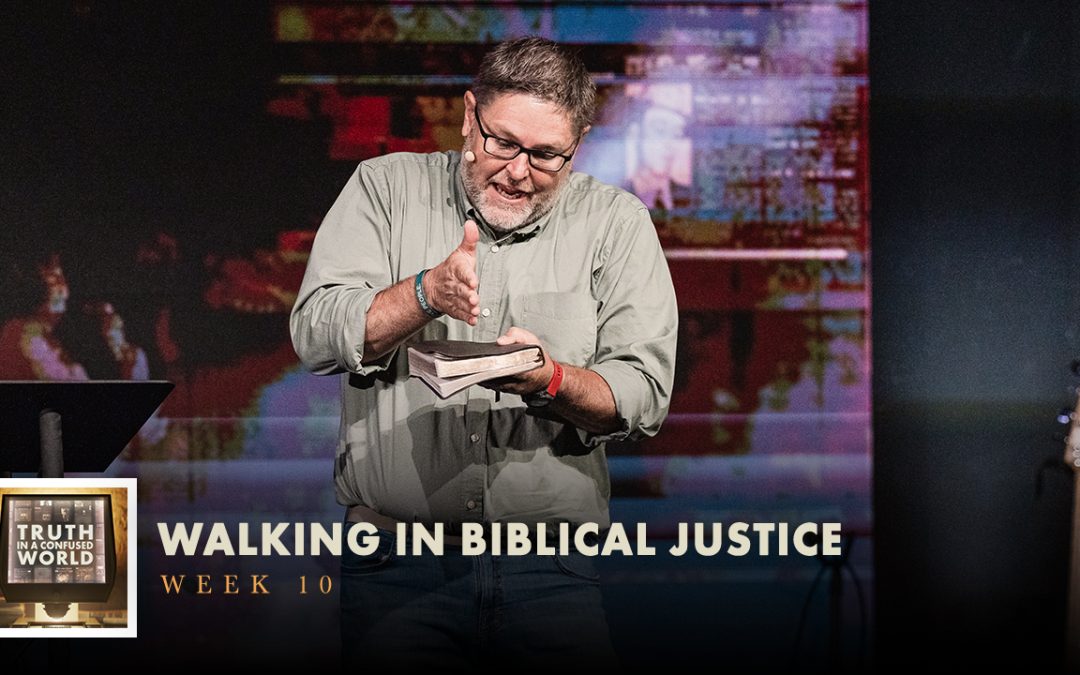
This powerful message challenges us to examine the foundation of our worldview and how it shapes our daily walk with Christ. Drawing from Micah 6:8, we’re reminded of God’s simple yet profound requirement: to do justice, love kindness, and walk humbly with our God. What’s striking is the distinction between biblical justice and the cultural definitions we encounter daily. Biblical justice isn’t just something we believe in—it’s something we actively do. It flows from understanding that we are all broken sinners saved only by God’s grace, made in His image regardless of our status, wealth, or background. The sermon beautifully connects this to Isaiah’s call to defend the fatherless and advocate for widows, reminding us that if our faith doesn’t move us toward the hurting, it’s not aligned with God’s heart. We’re confronted with the uncomfortable reality that partiality is sin—whether we show favoritism to the wealthy or turn away from the vulnerable. The message calls us to repentance, asking us to examine our hearts for pride, favoritism, and indifference. As we celebrate fathers and father figures, we’re reminded of our ultimate Father who demands justice but paired it with mercy by sending His Son to stand in our place. This Father’s Day reflection invites us to step toward the vulnerable in our communities, to correct oppression where we see it, and to live out justice not from a position of self-righteousness, but from humble gratitude for the grace we’ve received.
Jun 14, 2026 | Teaching Series
At the heart of this message lies a profound truth that challenges our modern world’s tendency to assign value based on utility and achievement: every human life is sacred because we are made in the image of God. From the moment of conception to our final breath, our worth is not determined by what we can do, how productive we are, or what we contribute to society. Instead, our value is intrinsic, given to us by our Creator who knit us together in our mother’s womb. This teaching draws deeply from Genesis 1:26-27 and Psalm 139, reminding us that God knew us before we were born and has written every day of our lives in His book. The implications are staggering: the unborn child, the elderly person with dementia, the disabled individual, the person we disagree with politically, even our perceived enemies—all bear the image of the Almighty. When we fail to see others as image-bearers, we open the door to the very sins that plague humanity: murder, exploitation, racism, and human trafficking. But when we embrace this biblical worldview, we become defenders of life at every stage, showing compassion not just in words but in practical, tangible ways. The parable of the Good Samaritan takes on new meaning here, challenging us to ask not who deserves our compassion, but how we can show compassion to everyone we encounter.
Jun 7, 2026 | Teaching Series
This powerful message takes us on a journey through the three tenses of salvation that shape our entire spiritual existence. We discover that justification frees us from the penalty of sin—that moment when conviction leads to repentance and we’re made right with God through grace. But the journey doesn’t end there. Sanctification, the ongoing process of becoming like Jesus, frees us from the power of sin as we cooperate with the Holy Spirit through surrender and obedience. Finally, glorification awaits us—freedom from the very presence of sin when we’re united with Christ in eternity. The sermon beautifully illustrates how sanctification means being set apart, like fine china reserved for special occasions, except we’re being prepared for God’s holy use. Drawing from 1 Thessalonians 4 and Matthew 5, we’re challenged to understand that the greatest sin isn’t murder or blasphemy, but failing to love God with all our heart, soul, mind, and strength. The battle for holiness happens in our minds, which is why we’re called to radically remove anything that causes us to stumble—whether relationships, habits, or influences. Yet there’s tremendous hope here: when we do fall, 1 John 1:9 promises that if we confess our sins, God is faithful to forgive and cleanse us from all unrighteousness. This isn’t about perfection but about direction—pursuing Christ with everything we have.
May 31, 2026 | Teaching Series
At the heart of our faith journey lies a fundamental question: where do we find our true identity and the intimacy our souls crave? This powerful exploration takes us back to the very beginning, to Genesis chapter 2, where God declares for the first time that something is ‘not good’—that man should be alone. We discover that marriage isn’t just a social construct or legal arrangement, but God’s divine design from creation itself. The beautiful imagery of woman created from man’s side—not from his head to rule over him, nor from his feet to be dominated—reveals God’s intention for complementary partnership. We’re challenged to recognize that every human heart longs for identity and intimacy, but these can only be truly satisfied in relationship with God through Jesus Christ. The message confronts modern confusion head-on, reminding us that regardless of cultural shifts or legal changes, God defines marriage as a covenant between one man and one woman. When Jesus addresses the Pharisees in Matthew 19, He redirects them back to creation’s design, emphasizing that divorce was a concession due to hardness of heart, never God’s ideal. We’re called to examine our own lives—whether single, married, struggling, or thriving—and align ourselves with God’s beautiful plan, understanding that mutual submission, sacrificial love, and covenant commitment reflect Christ’s relationship with His church.
